
Somewhere around week three or four, something shifts. The verses that used to jump off the page start to look like ordinary sentences. Prayer feels like talking into an empty room. You wonder if you did something wrong, or if the feeling you had at the start was ever real to begin with.
It was real. It just was not meant to carry you forever. The first rush of faith, the one where everything in the Bible feels new and every sermon feels aimed directly at you, is not the fuel for a lifetime of following Jesus. It is the spark. What comes after the spark is the part nobody warns you about clearly enough: the first year is full of hurdles that feel like failure but are actually just the normal shape of growing into a faith that lasts. Here are five of the most common ones, and what each one is actually asking of you.
When the Honeymoon Fades and the Bible Starts Feeling Like a Chore
The emotional high of early faith runs on adrenaline and novelty. You were hearing truth you had never heard before, and your mind and heart were working overtime to take it in. That intensity cannot sustain itself indefinitely, and it was never designed to.

What replaces it, if you let it, is something steadier. Reading the Bible stops being a spiritual thrill ride and starts becoming a discipline, the same way a person who loves running still has days they have to lace up their shoes when they would rather not. The discipline is not a downgrade from the feeling. It is what the feeling was supposed to turn into.
If the flatness has you wondering whether you are doing something wrong, the answer is almost always no. You are doing something right: you are staying at the table after the first course has been cleared. For a longer look at what this steadier routine actually looks like once the newness wears off, the daily habits of a mature disciple are worth reading closely.
The Doubt Spiral: What It Means When You Start Questioning Everything You Believed
Doubt shows up for almost every new believer, usually a few months in, and it rarely announces itself politely. One question leads to another, and soon you are lying awake wondering if any of it holds together.
This is not the collapse of your faith. It is your faith being handled, examined, and tested for the first time, which is a sign that it has become something real enough to interrogate. A belief you never question is often a belief you have not actually looked at yet. Scripture itself makes room for this: Thomas asked for proof, and Jesus met him with patience rather than rebuke.
The mistake is trying to white-knuckle your way through doubt alone, in silence, convinced that admitting the question out loud will make it worse. It does the opposite. Bringing the question to someone further along than you, a pastor, a mentor, a trusted believer, usually shrinks the question down to a size you can actually deal with. If you are not sure what to even ask, questions every new disciple should ask their mentor is a good place to start.
Falling Back Into Old Habits (And Why That Doesn’t Undo Your Faith)
You quit something, or you meant to, and then three months in you find yourself doing it again. The shame that follows can be louder than the failure itself, and it whispers that you were never really changed in the first place.

That whisper is a lie. Change in a person’s life rarely moves in a straight line upward. It moves more like a path up a hill with switchbacks, where you genuinely gain ground even while the trail occasionally doubles back on itself. Paul wrote about the war between what he wanted to do and what he actually did, and he wrote it as a mature believer, not a new one. Falling back into an old habit is not proof your faith is fake. It is proof you are human, and still in process.
What matters is what you do the next morning. Confession, a return to prayer, a decision to keep showing up, that is what faith looks like in year one. It rarely looks like perfection. It looks like getting back up.
The Comparison Trap: Why You Feel Like Everyone Else Is Further Along
Sit in a room with other believers long enough and you will start keeping score without meaning to. She prays for an hour a day. He can quote half of Romans from memory. You are still trying to remember which book comes after Matthew, and the gap feels enormous.
What you are comparing is someone else’s twentieth chapter to your first one. You have no idea what their first year looked like, how long it took them to build what looks effortless now, or what they are still quietly struggling with behind the parts you can see. Growth in faith does not run on a shared clock, and treating it like a race against other people turns something meant to draw you closer to God into something that just makes you feel smaller.
The piece on why spiritual growth takes time goes deeper into why this timeline is different for everyone, and why that is not a flaw in the process.
The Silence: What to Do When God Feels Distant
At some point, the sense of God’s closeness that felt so vivid early on seems to go quiet. You pray, and the room feels empty. You read, and nothing lands. It can feel like God left, or like you did something to push Him away.
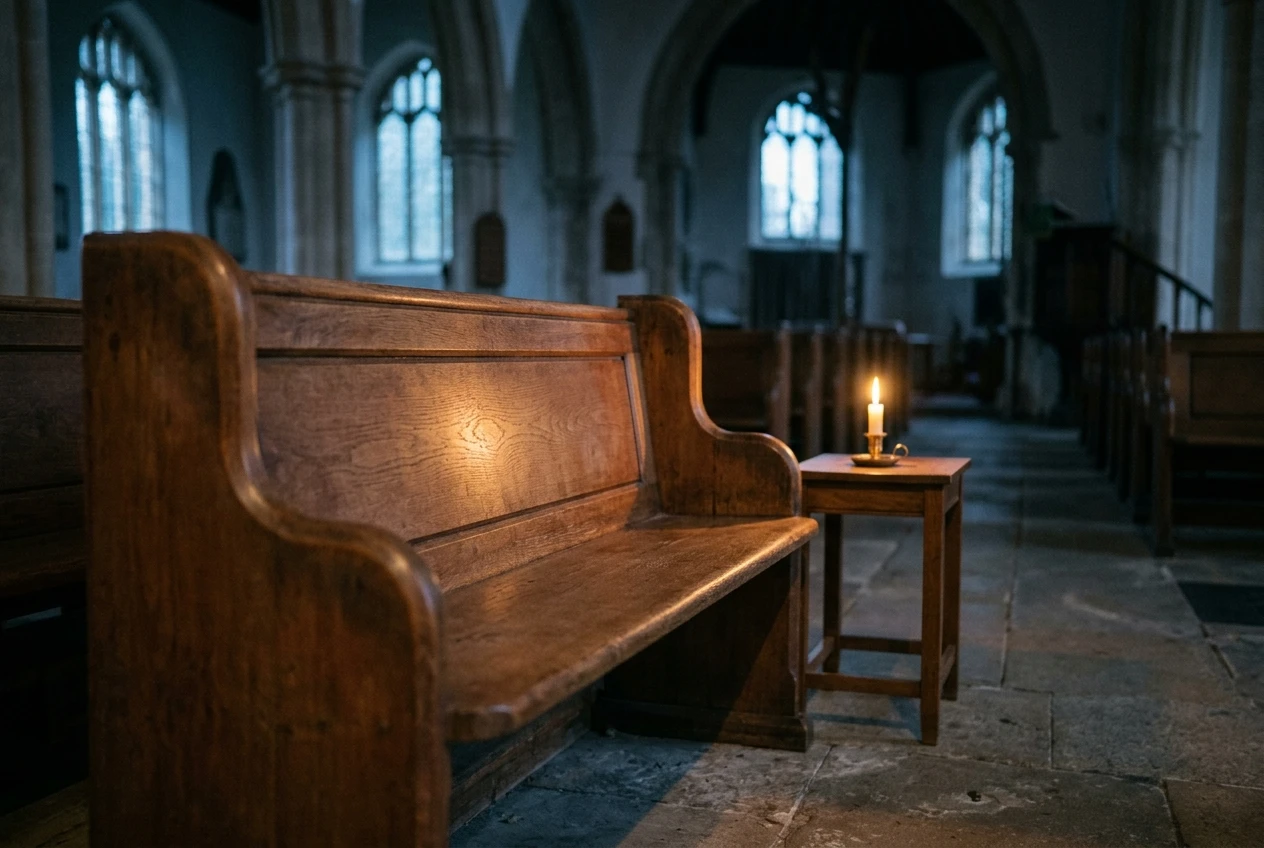
Scripture has a word for this kind of season, and it shows up more than most people realize. David wrote entire psalms from inside it, asking out loud why God seemed far off, and those psalms made it into the Bible rather than being edited out. Spiritual closeness is not measured by how strong a feeling is in any given week. It is measured by whether you keep showing up to pray and read even when the feeling is absent.
This is often exactly where a steady habit matters most, because habit carries you through the stretches that feeling cannot. If you are in this season now, a thirty day prayer plan built for beginners gives you something concrete to hold onto while the feeling finds its way back.
Why Feeling Alone Can Happen Even Inside a Church

It is possible to sit in a packed pew every Sunday and still feel like nobody around you understands what you are going through. This confuses a lot of new believers, because they assumed that walking into a church building would automatically solve the isolation.
A building full of people is not the same thing as a community of people who actually know your name and your struggles. Jesus did not train one disciple in isolation. He trained twelve, together, so that the weight of following Him would be carried by more than one set of shoulders. If your church attendance has not yet turned into real relationships with a few other believers, that gap is worth closing on purpose rather than waiting for it to close on its own.
A good starting point is making sure the church itself is the right fit for where you are. How to find a local church you can actually call home walks through what to look for, and community, not just attendance, is part of what makes a church feel like home.
Naming the Hurdle Is Half the Battle
Every one of these five hurdles feels, from the inside, like evidence that something has gone wrong with your faith. The fading feeling, the doubt, the backsliding, the comparison, the silence: each one arrives dressed up as proof of failure. Named correctly, each one is just a normal passage that almost every believer walks through on the way to something sturdier.
The real danger is not hitting these hurdles. It is hitting them without knowing what they are, and quietly concluding that you are the exception, the one person for whom faith simply did not take. You are not the exception. You are early.
If you are walking through one of these hurdles right now, the course’s structured path can walk with you one step at a time, starting with your first ninety days as a disciple.