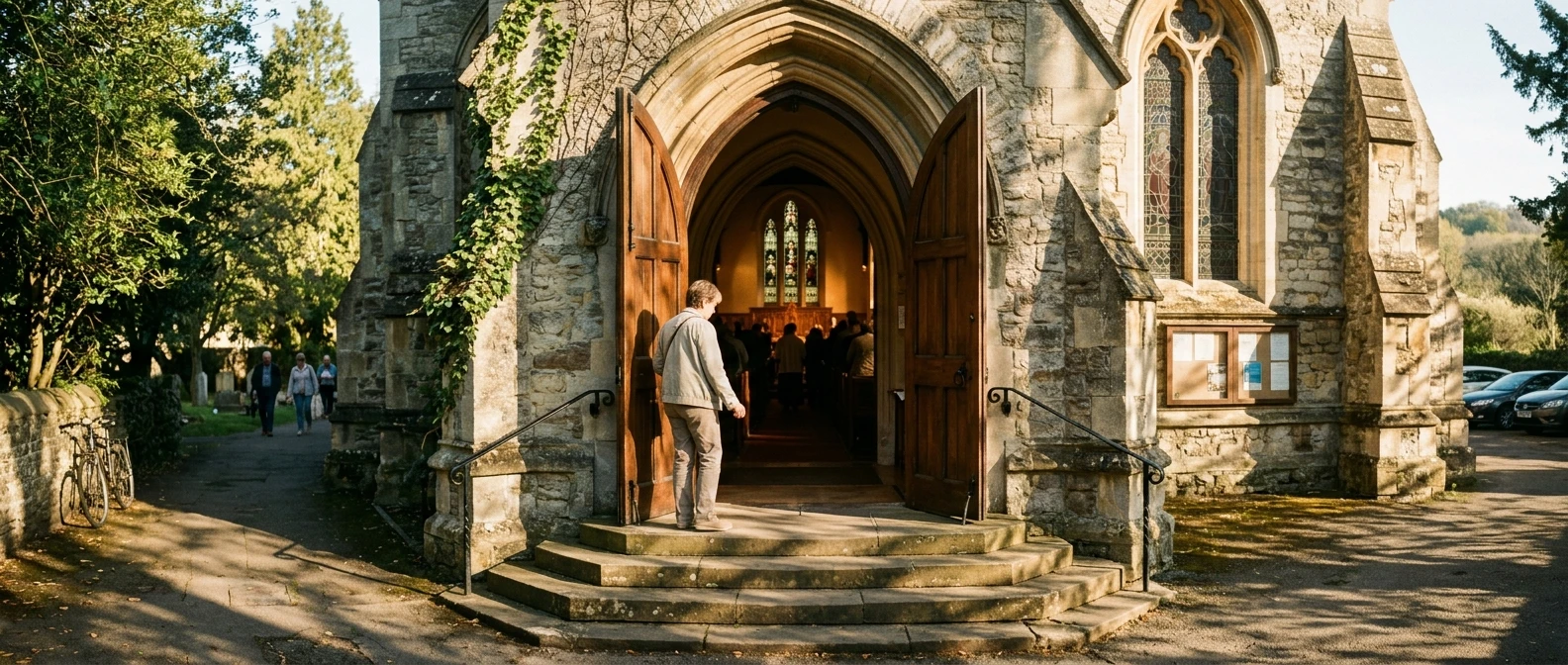
Your Bible study has taught you to recognize God’s voice, build a prayer habit, and read Scripture with real understanding. All of that was meant to lead somewhere beyond your own living room. Jesus did not design the Christian life to be lived alone, and at some point every new believer who has been studying on their own reaches the same question: how do I actually find a church?
This article picks up where the theological case for community leaves off. You already know why community matters. What follows is the practical, week-by-week process for finding a real church, visiting it, asking the right questions, and recognizing whether it is the place where you belong.
Why Your Bible Study Was Always Meant to Lead You Here
Studying Scripture on your own has built something real in you. You have learned to pray, to read the Gospels with attention, and to hear the Holy Spirit’s guidance in ordinary decisions. None of that was the finish line. It was preparation for joining a body of believers who can sharpen what you have learned and hold you steady when your own strength runs out.
A private faith can survive for a season, but it was never built to last on its own. Scripture consistently describes believers meeting together, teaching one another, and carrying each other’s burdens. You cannot do any of that from a chair at home. The next move is a visit.
What to Look for Before You Even Search
Before you type anything into a search bar, it helps to know what you are actually looking for. A church worth attending will hold to the basics: the authority of Scripture, the death and resurrection of Jesus, and salvation by grace rather than by effort or performance. Everything else, worship style, building size, service length, is secondary.
Think through a short list before you start:
-
Does the church teach directly from the Bible, rather than mostly from the pastor’s personal opinions?
-
Does it have a plan for connecting new people, or does it expect you to figure things out alone?
-
Is there a visible commitment to prayer, not just as an opening formality but as an ongoing practice?
-
Does the church talk about discipleship, growth, and training, not just attendance?
Write these down if it helps. Having a short, clear list keeps you from being swayed by a good band or a warm greeting alone.
Where New Believers Actually Find Churches
Most people overthink this part. A few practical starting points work well for nearly everyone:
-
Ask someone you trust. If a friend, coworker, or family member already attends a church they love, ask what they appreciate about it and whether you could visit with them.
-
Search online directly. Searching for churches in your area, along with your denomination preference if you have one, will surface websites, service times, and statements of belief.
-
Check the church’s website before you go. Most churches post a statement of faith, a staff page, and photos or video of an actual service. Read the statement of faith first. If a church is vague about what it believes, that is useful information.
-
Listen to a recent sermon online. Many churches post their messages. Ten minutes of listening tells you more about a church’s priorities than almost anything else you could research.
None of these steps require courage yet. They just require a little time at your computer or phone before you walk through a door.

Questions to Pray Through Before Your First Visit
Walking into a new church for the first time can feel vulnerable, especially if you are still new to faith altogether. Praying through a few honest questions beforehand settles your heart and sharpens what you are looking for.
Consider praying through these before you visit:
-
Lord, give me discernment to recognize a church that teaches your word faithfully.
-
Help me not to judge too quickly by style or comfort alone.
-
Give me patience if the right church takes more than one visit to find.
-
Help me notice whether this is a place where I could grow, not just attend.
If you have been building a habit of hearing the Holy Spirit’s guidance in daily decisions, this is exactly the kind of decision worth bringing to him directly. The guide to recognizing the Spirit’s guidance can help you slow down and listen rather than rushing to a decision out of nerves or pressure.
Red Flags That Mean Keep Looking
Not every church is a healthy church, and a new believer will not always recognize trouble right away. A few warning signs are worth taking seriously:
-
The pastor’s personality is the main draw. If the church revolves around one charismatic figure rather than Scripture itself, be cautious.
-
Money comes up constantly. Healthy churches talk about giving, but they do not pressure, guilt, or manipulate people into it, especially visitors.
-
There is no clear statement of belief. A church that cannot explain what it believes in plain language, or that avoids the question, is not a safe place to build your faith.
-
Leadership is closed off or unaccountable. Ask who the pastor answers to. A healthy church has some structure of accountability, whether that is elders, a denomination, or a board.
-
Isolation is encouraged. If a church discourages relationships outside itself, or treats questions as disloyalty, that is a serious warning sign, not a sign of deep commitment.
Trust your discomfort if something feels off. You are allowed to leave after one visit and never go back. That is not disrespectful. It is wisdom.
Signs You Might Have Found Your Church Home
On the other side, some signs point toward a church worth staying in long enough to find out more:
-
The teaching consistently points back to Scripture, not just to the pastor’s opinions or current trends.
-
People seem genuinely glad you are there, without being pushy or overly intense about it.
-
There are real opportunities to get involved beyond Sunday morning: small groups, prayer gatherings, or service opportunities.
-
Leadership is reachable. You could email or call the church office and expect an actual response.
-
The church talks openly about discipleship and growth, not just about filling seats.
You likely will not find a church that checks every box perfectly. Look for a church that is faithful in the basics and honest about its own imperfections.
What Usually Happens in Your First Few Visits
Knowing roughly what to expect takes some of the pressure off that first Sunday. Most churches follow a similar basic pattern: some form of worship through music, a time of prayer, announcements about upcoming events, and a sermon that is usually twenty-five to forty-five minutes long. Many churches have a welcome table or greeters near the entrance, and some will ask visitors to fill out a short card with contact information, though you are never required to do this.
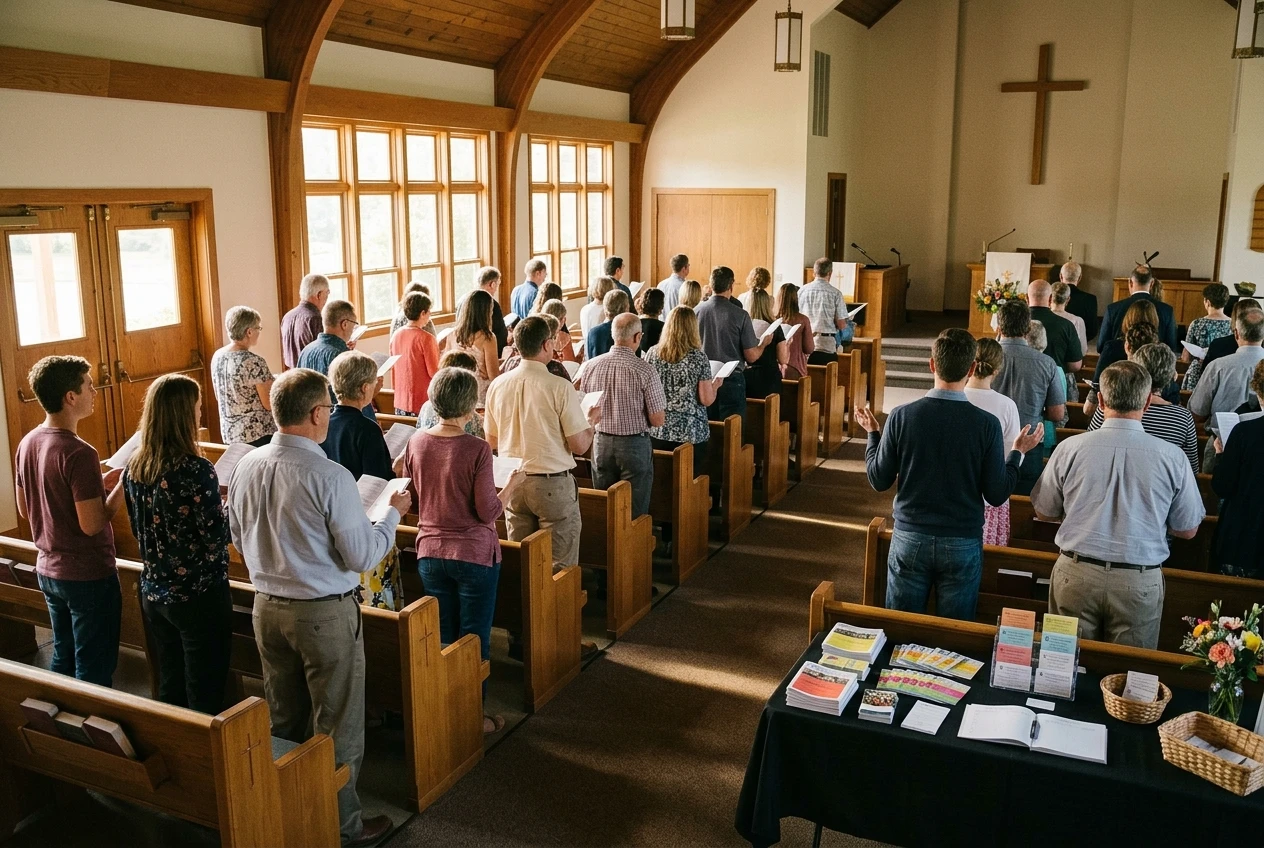
Expect a little awkwardness. You may not know when to stand or sit, and you may not recognize the songs. That is normal for almost everyone’s first visit anywhere, not just at church. Give yourself permission to feel a little out of place without treating it as a sign you do not belong.
Plan to visit the same church at least two or three times before making a judgment. One sermon or one awkward interaction does not tell you the whole story. A pattern across a few visits tells you much more than a single Sunday ever could.
Taking the Next Step: Membership and Getting Involved
Once you have visited a church a few times and sense it might be the right place, the next step is usually some form of membership class or new member orientation. Most churches offer this as a way to explain their beliefs, structure, and expectations more fully before you commit. Attending this class does not obligate you to join immediately. It simply gives you the full picture so you can make an informed decision.

After membership, or even before it, look for one small way to get involved: a small group, a serving team, or a prayer gathering. Involvement is where real community actually takes root. Attending a service each week keeps you informed. Joining a group is what builds the relationships that carry you through hard seasons.
Finding a church home takes patience, a little courage, and a willingness to visit more than once before deciding. The process is not complicated, but it does require actually showing up.
Once you have found a church to visit, come back and revisit “Why Jesus Trained Twelve, Not One: The Case for Studying Scripture in Community” so you walk in already understanding why this step matters.