
Most new believers do not quit praying because they stop caring. They quit because the first few days expose a gap between what they expected prayer to feel like and what it actually felt like, and nobody warned them the gap was normal.
You sit down to pray, and either nothing comes to mind, or your mind wanders to the grocery list, or you say the same three sentences you said yesterday and feel like you are repeating yourself to someone who already knows. By day three, the five minutes you meant to spend with God turns into five minutes of frustration, and it is easier to tell yourself you will try again tomorrow. Tomorrow rarely comes.
This is not a discipline problem. It is a skills and expectations problem, and both can be fixed in thirty days with a plan that names the actual obstacles instead of just telling you to try harder.
Why Most New Believers Quit Praying by Day Three
The pattern is predictable enough that you can set a clock by it. Day one, you are motivated and prayer feels fresh. Day two, you run out of things to say partway through and start filling the silence with repeated phrases. Day three, something interrupts you, a phone call, a child, a thought you cannot shake, and the five minutes dissolves into two minutes of scattered attention. By day four, skipping feels less costly than showing up and feeling like you failed again.

What breaks here is not your love for God. It is the assumption that prayer should feel natural right away, the same way picking up a guitar for the first time and expecting to play a song does not work. Nobody plays well on day one. Prayer, like any relationship and any skill, has a learning curve, and the curve is steepest in the first month.
A thirty day prayer plan for beginners exists to flatten that curve. It gives you something to do each week instead of leaving you to improvise against five specific blocks that trip up nearly everyone who starts.
The Five Real Blocks Behind an Inconsistent Prayer Life
Before the plan, name the blocks. You will meet all five during the next thirty days, and knowing their names in advance takes most of their power away.
-
Not knowing what to say. You want to talk to God but the words will not come, so you freeze or default to the same short phrase every time.
-
Distraction. Your body sits still while your mind runs through the day’s tasks, old conversations, or tomorrow’s worries.
-
Inconsistency. You pray well for two or three days, then life gets busy and the habit slips before it has any roots.
-
Guilt after missed days. You miss a day, feel like you have failed, and the guilt itself becomes a reason to avoid praying rather than return to it.
-
Feeling like God isn’t listening. You pray and feel nothing back, no sense of presence, no answer, and start to wonder if anyone is actually there.
Every week of this plan targets one or more of these directly. None of them get solved by willpower alone. They get solved by changing what you do during the five or ten minutes you have set aside.
Week One: Showing Up for Just Five Minutes a Day
The goal in week one is not depth. It is showing up. Set a timer for five minutes, pick a time of day you can actually protect, and sit down whether you feel like it or not.

Use this structure for the five minutes:
-
One minute: say thank you for three specific things from the last day.
-
Two minutes: tell God what is on your mind, out loud or in a journal, without worrying about sounding right.
-
One minute: sit quietly and do nothing. Do not fill it.
-
One minute: ask for one thing you need today.
This directly addresses distraction and the “what do I say” block, because you are not staring at a blank five minutes wondering where to start. You have a shape to fill. Five minutes is short enough that almost nobody fails to find the time, and that matters more than the content. You are training a habit, not writing a sermon.
If day three arrives and you want to skip, do the one minute version instead of nothing. A minute done beats five minutes planned and abandoned.
Week Two: Praying Scripture Instead of Searching for Words
By week two, the blank page problem usually returns even after the structure of week one. This is where praying scripture solves the “I don’t know what to say” block for good, because you stop generating words from nothing and start praying words that are already given to you.

Pick a short passage, a Psalm works well, and pray it back to God phrase by phrase. If the psalm says “The Lord is my shepherd, I shall not want,” pray something like: “Thank you that you are my shepherd. Help me actually believe I shall not want today, because right now I am anxious about [name the thing].” You are not reciting. You are using scripture as the starting point for your own words, which gives you both structure and honesty at once.
This week is also a natural place to slow down and read a little more carefully than a quick morning glance allows. If you want a simple method for sitting with a passage longer, a simple method for moving past just reading walks through exactly that, and it pairs well with what you are doing here, since praying a passage and studying a passage reinforce each other.
Keep the five minute structure from week one but replace the middle section with scripture prayer. You are not adding time, you are changing how you fill it.
Week Three: Praying Honestly When You Don’t Feel Anything
This week tackles the hardest block: feeling like God isn’t listening. By week three, the novelty has worn off, and some days you will pray and feel nothing. No warmth, no sense of presence, no answer that you can point to.
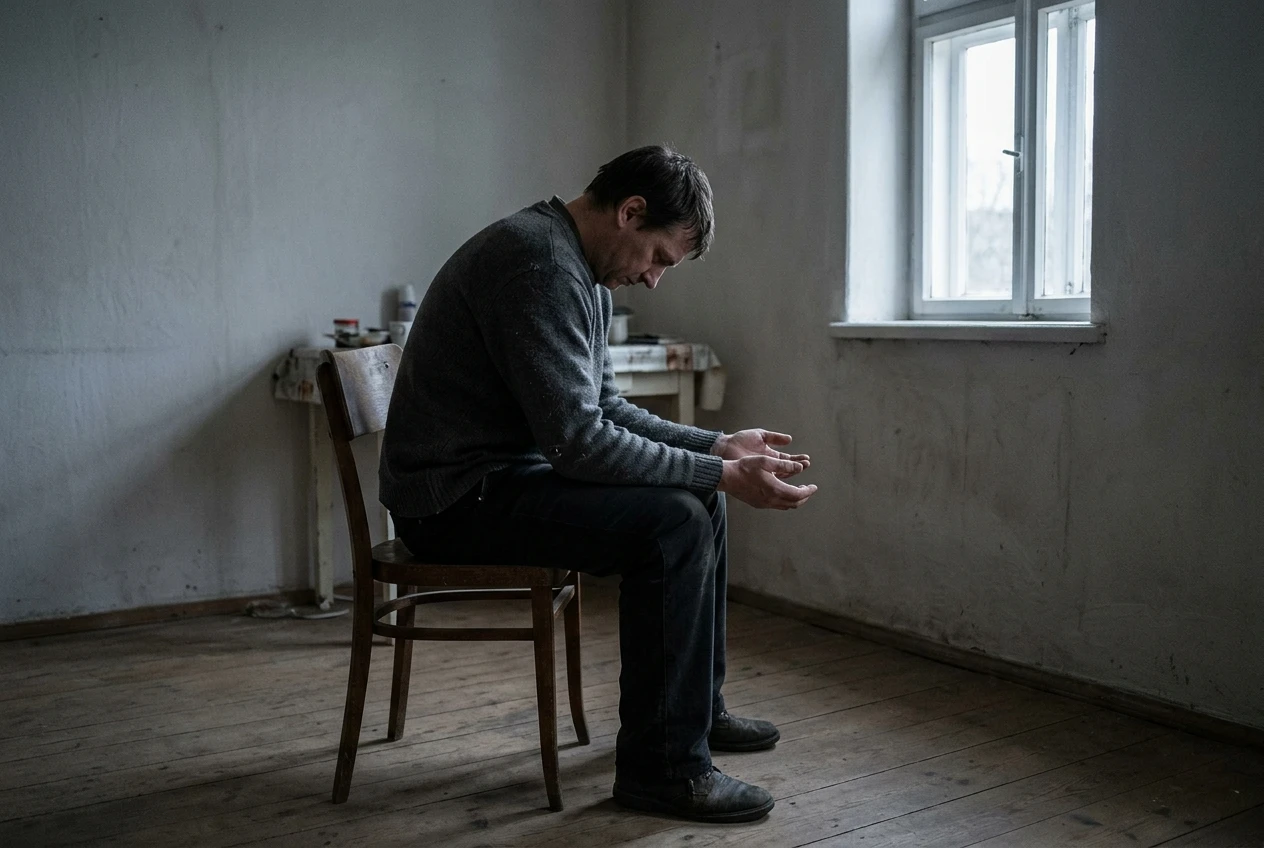
Here is what to do with that: say it out loud. “God, I don’t feel like you’re listening right now, and I’m praying anyway because I believe you are, even when I can’t feel it.” Honesty like this is not weak faith. It is faith choosing to keep speaking even when the emotional feedback is absent, and it is one of the most normal experiences in a praying life, not a sign that something is broken.
Feelings are not the measure of whether prayer worked. A prayer prayed with dry eyes and a flat heart reaches God exactly as much as one prayed with tears, because the measure is not your emotional state, it is that you showed up and spoke honestly. Expecting a feeling every time sets you up to quit the moment the feeling does not arrive, and it will not arrive every time.
This week, add one line to your five minutes: name exactly how you feel, even if the honest answer is “flat” or “distracted” or “bored.” Naming it to God is itself the prayer. You are not performing devotion, you are being honest with someone who already knows how you feel and is waiting for you to say it.
Week Four: Turning the Habit Into a Rhythm That Lasts
By week four, the five minute structure should feel less like an assignment and more like something you reach for without deciding to. This week is about extending the habit into a rhythm rather than adding more rules.

A rhythm has an anchor, something in your existing day that the prayer time attaches to, like right after you make coffee or right before you check your phone in the morning. Habits that float with no anchor tend to drift and disappear within a few weeks. Habits attached to something you already do every day tend to stick.
This week, also give yourself permission to let the five minutes grow if it wants to, without forcing it. Some days it will stay five minutes. Some days you will find yourself still there at fifteen. Let the length follow your attention rather than a rule, because the goal was never to hit a number of minutes, it was to build a daily habit of showing up.
If you want company in the next stage of your walk, studying alongside others tends to deepen what you are building alone in prayer. The case for studying scripture in community is worth a look once your personal prayer habit has some roots under it.
What to Do the Day You Miss (Because You Will)
You will miss a day. Plan for it now so guilt does not get to make the decision for you later.

When you miss a day, do not try to make it up by doubling the next day’s time, and do not let the miss turn into a week. The only rule is this: the next time your anchor moment arrives, show up for the five minutes, even if yesterday did not happen. One missed day is a missed day. It is not evidence that the habit failed or that you are bad at this.
Guilt tells you that missing a day means you should wait until you feel more ready, more consistent, more deserving, before trying again. That is exactly backwards. The fastest way out of guilt is to pray again, not to wait until the guilt passes on its own. Treat a missed day the way you would treat a missed meal: you do not skip eating for a week because you missed lunch on Tuesday, you just eat again when the next mealtime comes.
By the end of thirty days, you will not have a perfect record, and you do not need one. You will have a habit that survived its own interruptions, which is a far sturdier thing than a habit that only worked because nothing ever got in the way.
If you would like daily guides and companion teachings that walk with you through each of these four weeks, from the five minute start through the honest, feeling-nothing days to the rhythm that lasts, subscribe to the course and let it walk alongside you one day at a time.