
Standing at the subscribe button, you probably have one honest question: what am I actually paying for? It’s a fair question, and it deserves a straight answer rather than a sales pitch. This article walks through each part of the membership, piece by piece, so you know exactly what you’re getting and how to use it well from your very first day.
What’s Actually Inside Your Membership
The membership is built around a handful of connected parts, not one single feature. There are daily lessons that walk you through Scripture and the teachings of Jesus in order, rather than leaving you to guess where to start. There’s a community space where other new disciples work through the same material and talk about it together. There are guided prayer and meditation tools for the parts of your walk that happen in quiet rather than in a lesson. There’s a way to track your own growth over time. And there are live teaching sessions where you can ask questions directly rather than only reading.
None of these pieces was designed to stand alone. The lessons give you the content, the community gives you a place to process it, the prayer tools give you a place to apply it, and the tracking shows you whether any of it is actually taking root. Skipping one weakens the others, which is why the rest of this article treats each part on its own terms.
Pacing Yourself Through the Daily Lessons
The daily lessons are built to be worked through in order, a little at a time, not binged in one sitting on a Saturday afternoon. Each one builds on the last, so rushing ahead to “get through it” usually means you arrive at lesson twelve without having actually absorbed lesson three.

A good rhythm is to treat the lesson as the start of your day rather than the end of it. Read it, sit with it for a few minutes, and let it shape what you’re thinking about before the day’s noise sets in. If you miss a day, don’t try to catch up by doubling the next lesson. Just pick up where you left off. The goal is depth over time, not a completed checklist.
If you want a sense of how this looks across a longer stretch, a day by day roadmap for your first ninety days as a disciple walks through what a realistic pace actually looks like in practice, which pairs well with the lessons themselves.
Using the Community Discussions Instead of Skipping Them
It’s tempting to treat the community discussion threads as optional, something you’ll get to once you’ve finished the “real” work of the lesson. Resist that. The discussions are where the lesson stops being information and starts being understanding, because you see how other new believers are wrestling with the same passage, often from angles you wouldn’t have thought of on your own.

You don’t need to post something polished. A single honest question, or even just “I don’t understand this part,” is enough to start a real conversation. Jesus trained twelve disciples together rather than one at a time in private, and there’s a reason for that pattern worth understanding if you’ve never thought about it before.
Read quietly for your first few days if that feels safer. But set yourself a date, maybe the end of your first week, by which you post something. Silent reading never builds the kind of accountability that community discussion does.
The Guided Prayer and Meditation Tools, and When to Use Them
The guided prayer and meditation tools are there for the moments when you need structure to pray well, not just a reminder to pray at all. If you’re new to prayer, or if your prayer life has always felt like talking into a void, these tools give you a starting shape to work with rather than a blank page.
Biblical meditation, as this membership teaches it, isn’t about clearing your mind. It’s about filling it, deliberately, with a specific truth or passage until it becomes something you can recall under pressure later. That’s a different discipline from the kind of meditation most people have heard of, and it’s worth understanding the difference before you dismiss the tool as something you’ve already tried.

Use the guided sessions in the morning if your days tend to get noisy by afternoon, or in the evening if you need help settling your mind before sleep. There’s no required time of day. There is a required consistency, and if you want a structured way to build that consistency, a thirty day plan for building a steady prayer habit lays out a workable path for the early weeks.
Tracking Your Growth Without Turning It Into a Checklist
The membership includes a way to track what you’ve worked through and how your understanding is developing. Used well, this is encouraging. Used poorly, it turns into a scoreboard that makes your walk with Jesus feel like a task list you’re racing to clear.
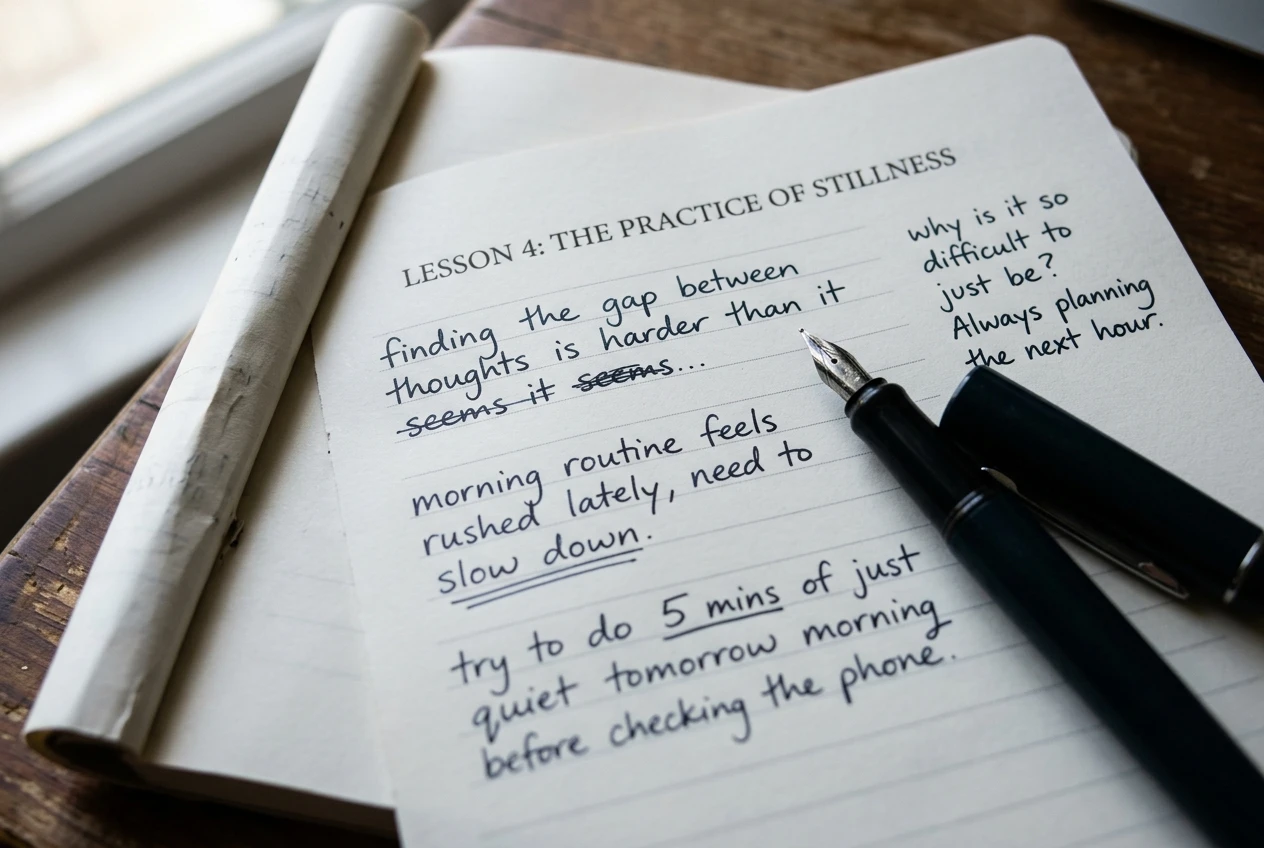
The difference is in what you’re measuring. Tracking that you completed lesson fourteen tells you almost nothing. Tracking that you can now explain, in your own words, what a particular teaching of Jesus means and how it applies to a decision you’re facing, that tells you something real. If the tracking tool lets you add your own notes, use that space for the second kind of record, not just the first.
Check your progress weekly rather than daily. Daily checking turns growth into a performance metric, and performance metrics tend to produce either false confidence or discouragement, neither of which is the point.
Getting the Most from Live Teaching Sessions
Live sessions are where the membership stops being a one way delivery of content and becomes a conversation. You can ask a question in real time about something that’s been sitting unresolved since lesson six, and get an answer shaped specifically for your situation rather than a general explanation written for everyone.

Come with a question already in mind. The sessions move quickly, and if you walk in hoping something will occur to you in the moment, it often won’t. Keep a running note through the week of anything confusing or unclear, and bring that list with you.
If you can’t attend live, watch the recording within a day or two while the week’s lessons are still fresh. Recordings watched a month later lose most of their value, because by then you’re three weeks further along and the question you had has either faded or changed shape entirely.
Three Mistakes New Members Make in Their First Month
Trying to do everything at once. New members sometimes try to finish every lesson, post in every thread, use every prayer tool, and attend every live session in the first week, out of enthusiasm or out of fear of falling behind. That pace is not sustainable, and it usually produces burnout by week three. Pace yourself the way you would any habit you intend to keep for years, not weeks.
Treating the membership as a solo tool. The community and live sessions exist because growth in isolation is slower and shakier than growth alongside others. A member who only ever reads the lessons privately is using roughly half of what they’re paying for. If that describes your approach to your faith life more broadly, it may also be worth looking into finding a local church you can call home, since the membership is meant to support that step, not replace it.
Quitting the first time life gets busy. The first month often includes a week where work, family, or just exhaustion makes the daily lesson feel impossible. New members sometimes read that one disrupted week as proof the membership “isn’t working” and quietly stop. A disrupted week is not a failure. It’s just a disrupted week, and the pacing built into the lessons is forgiving of exactly that if you let it be.
Where to Go From Here
You now know what each part of this membership actually does and how to use it well. The daily lessons give you the content, the community gives you a place to test it against other believers, the prayer and meditation tools give you practice applying it, the tracking gives you an honest record of where you stand, and the live sessions give you a direct line to ask what’s still unclear.
None of that works from the outside looking in. If you’ve been standing at the subscribe button wondering whether it’s worth it, you now have the actual answer rather than a guess. Start your subscription, or pick back up where you left off, and begin using it the way it was built to be used.