
Most new believers start their walk with Jesus by reading. You open the Bible, pick a chapter, read it the way you’d read any book, and move on to the next chapter the next day. That habit is good. It keeps you in the Word. But at some point you notice that you’ve read through whole books and couldn’t tell someone what they actually said. That’s the moment to learn how to do a deep Bible study for beginners, not just how to read one.
This article gives you a method, five parts, that you can use today on a single passage. It won’t take hours. It will take focus.
Why Reading the Bible Isn’t the Same as Studying It
Reading moves forward. Studying stays still.
When you read, your eyes cover ground: a chapter, maybe three. When you study, you stop on a handful of verses and ask them questions until they start answering. Reading tells you what happened. Studying tells you why it was written down, what it meant to the people who first heard it, and what it asks of you now.
Both have their place. A daily reading plan keeps the whole story in front of you. But if reading is the only thing you ever do, you’ll end up with a general sense of the Bible and very little grip on any one part of it. Study is where that grip gets built, one passage at a time.
Pick One Short Passage and Stay There
The first move is the hardest for a lot of new believers: narrow down. Choose a single paragraph, not a chapter. Ten to fifteen verses is plenty. A parable. A short section of a letter. One scene from a Gospel.
Resist the urge to cover more ground. The temptation when you start studying is to treat it like reading with extra steps, so you try to study five chapters in one sitting. That defeats the purpose. A deep study of six verses will teach you more than a shallow pass through sixty.
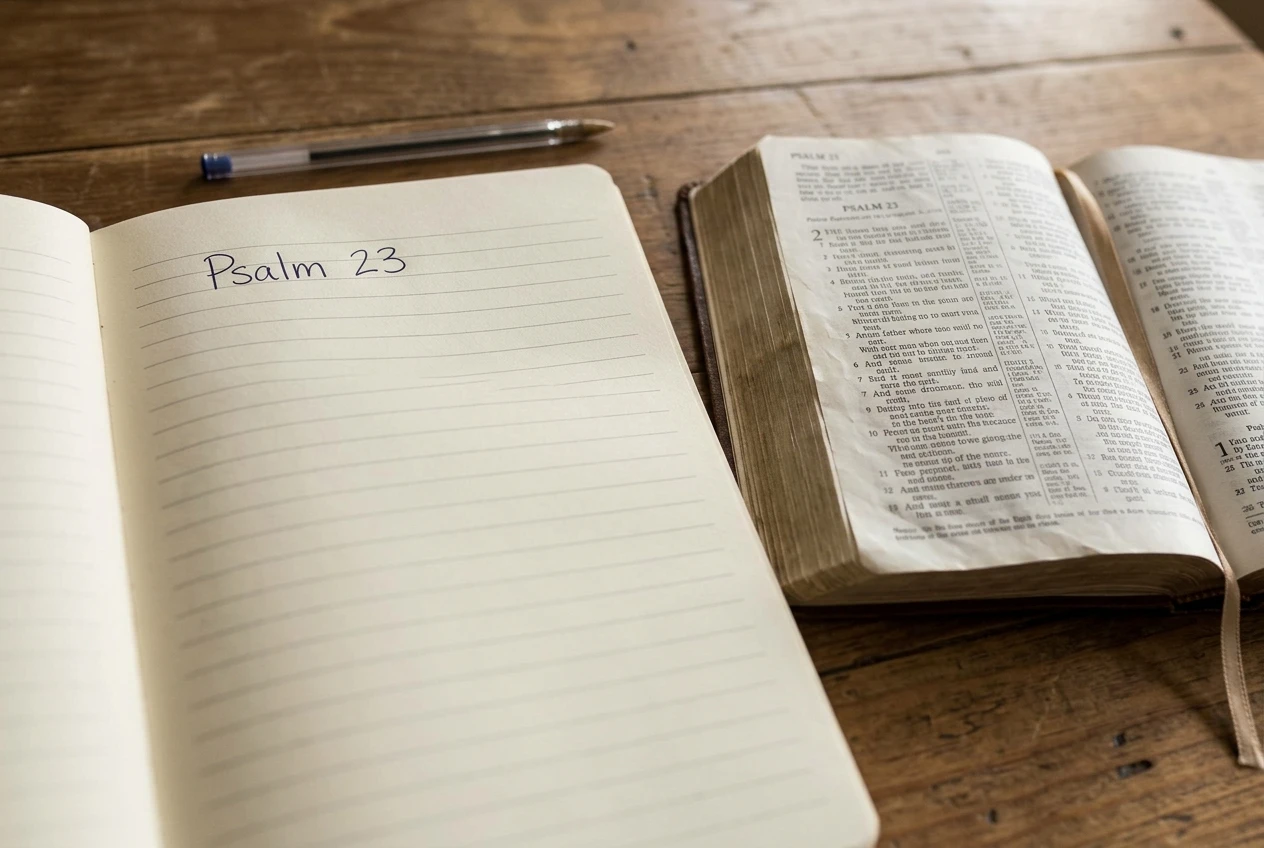
Write the reference at the top of a page before you do anything else: the book, the chapter, the verses. That’s your whole territory for this session. Everything else below happens inside that boundary.
Observe Before You Interpret: What Does the Text Actually Say
Before you ask what a passage means, ask what it says. This step gets skipped constantly, and skipping it is why so many Bible studies drift into guessing.
Read the passage slowly, several times, and just notice things. Don’t reach for meaning yet. Reach for facts.
-
Who is speaking, and who are they speaking to?
-
What happens, in order?
-
What words repeat?
-
Is there a change: someone moves from one place to another, one belief to another, one condition to another?
-
What’s surprising or unexpected in the passage?
Write these observations down as plain statements, not interpretations. “Jesus asks a question instead of answering one” is an observation. “Jesus is teaching us not to argue” is already an interpretation, and it’s too early for that. Observation slows you down enough to actually see the text instead of the version of it you already assumed was there.
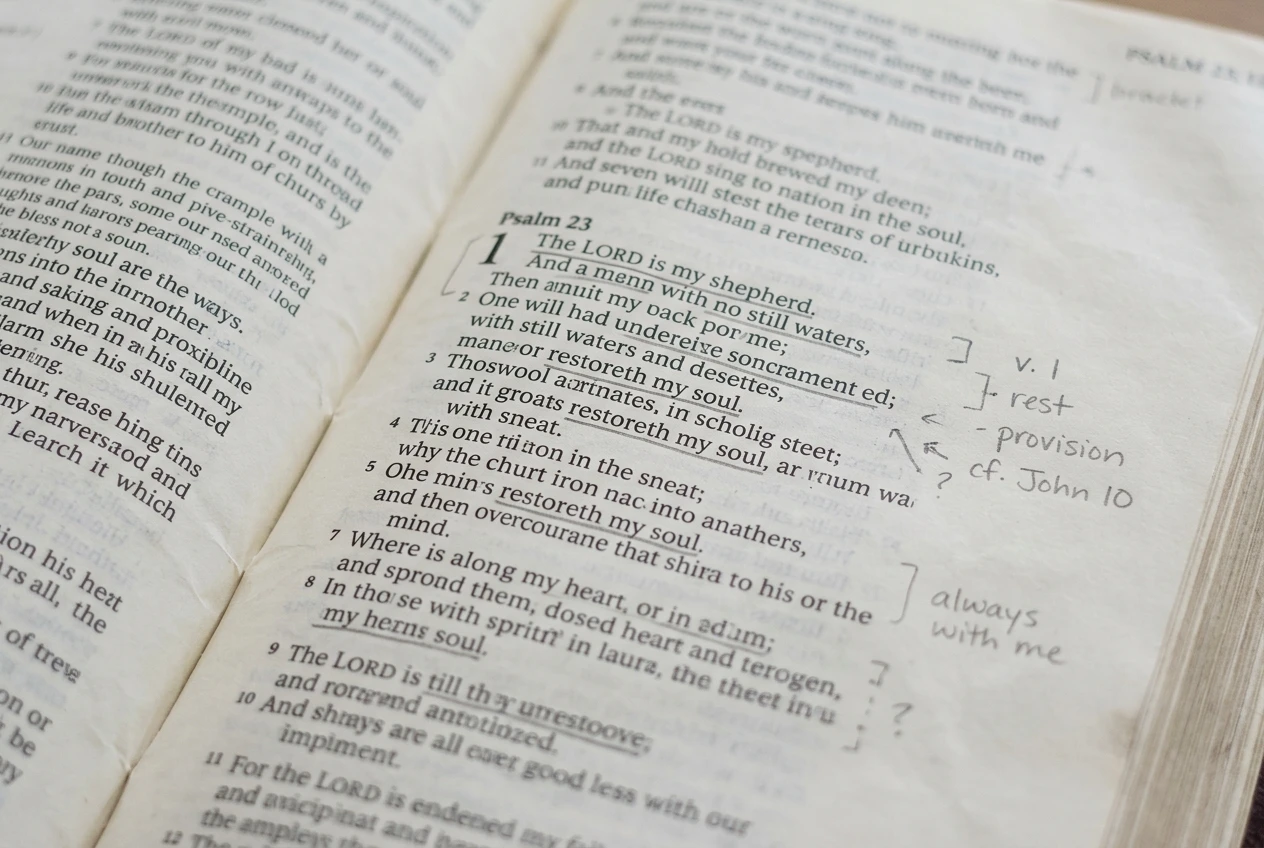
Ask the Questions That Unlock Meaning
Once you’ve observed, you’re ready to interpret, and the way in is through questions, not conclusions.
A few that work on almost any passage:
-
What did this mean to the original audience, before it meant anything to me?
-
What does this show me about who God is?
-
What does this show me about people, about human nature?
-
Is there a command here, a promise, a warning, or an example?
-
Why did the author include this detail and not leave it out?
Answer these in writing, even if your answers feel rough. The goal isn’t a polished conclusion. The goal is to make yourself account for what’s in front of you instead of skating past it. A question like “why does this detail matter” will often surface something you’d have missed on a straight read-through, because reading moves too fast to ask it.
Let Scripture Explain Scripture
A single passage rarely stands alone. The Bible was written over a long span of time by different authors, but it holds together as one story, and one part often explains another.
Cross-referencing means looking for other passages that touch the same idea, the same word, the same event, or the same command, and reading them alongside the one you’re studying. If you’re studying a parable about a vineyard, it helps to know how the vineyard is used as an image elsewhere. If you’re studying Paul’s instructions to a church, it helps to see how Jesus taught on the same subject.

You don’t need a library to do this. A study Bible or a basic concordance will give you cross-references in the margins or at the back. Follow two or three of them, read the verses, and ask whether they confirm, sharpen, or add to what you found in your main passage. This step is where a study stops being your opinion about a verse and starts being grounded in the whole of scripture.
Write Down What You’re Learning as You Go
Everything above works better on paper than in your head. Memory is unreliable, especially a week later when you want to recall what you learned.
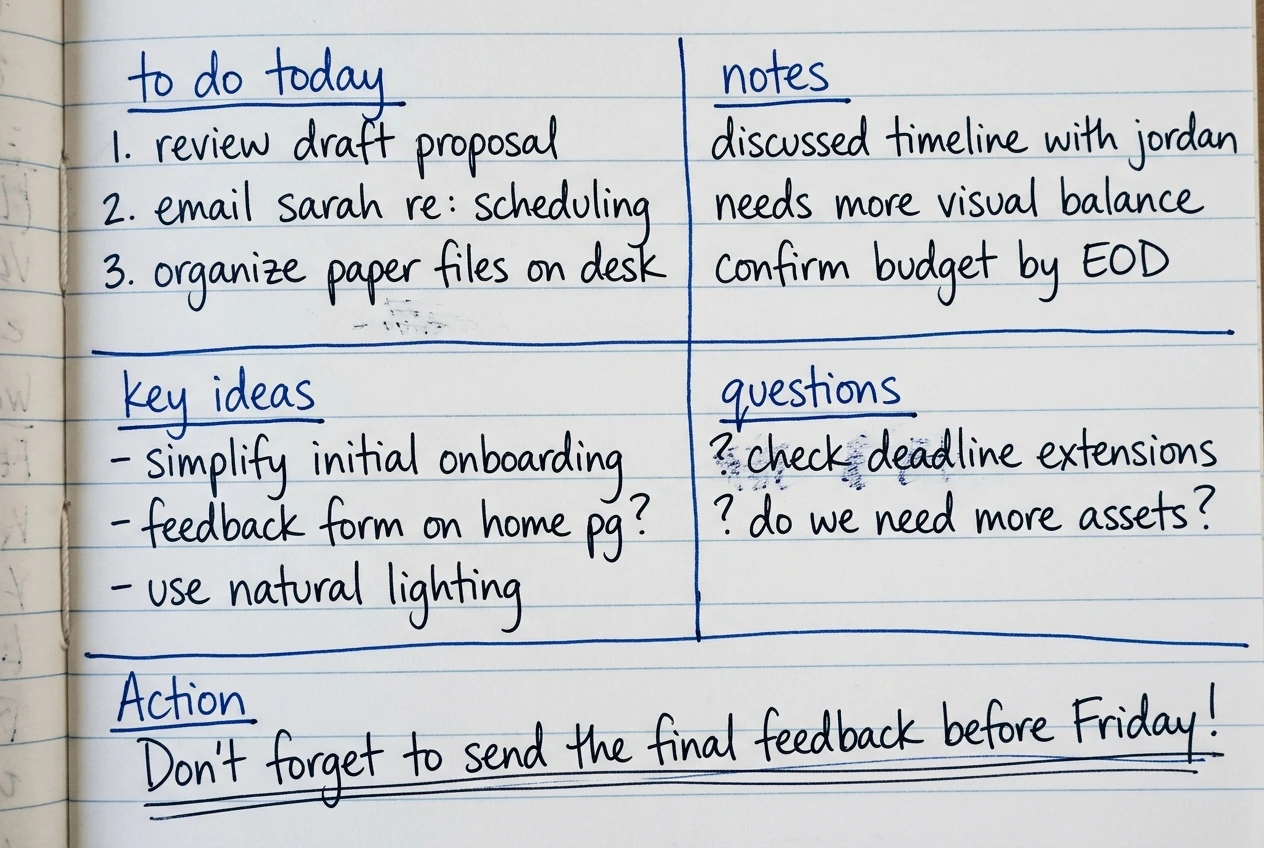
Keep a simple study notebook, or a document on your phone, structured around the same questions every time:
-
Passage and date
-
What I observed
-
What it meant to its first audience
-
What it means now
-
Cross-references I checked
-
One sentence summing up the main point
That last line matters more than it looks. If you can’t reduce a study to one honest sentence, you probably haven’t finished thinking about it yet. Writing forces clarity that staying in your head never will.
Over weeks, this notebook becomes something you can look back on, and that’s part of the point of studying at all: not just understanding scripture once, but having it available to bring back to memory later, when you need guidance in an actual decision or a hard moment.
Turn What You Find Into a Prayer and a Change
A study that stays in a notebook hasn’t finished its job. The last move is to take what you found and do something with it: pray it, and apply it.
Praying it means turning your observations into actual words to God. If the passage showed you something about His character, thank Him for it specifically, by name, not in general terms. If it showed you a command, ask for help obeying it. If it showed you a warning, ask for honesty about where that warning applies to you.
Applying it means naming one concrete, small action tied to what you studied, something you can actually do this week. Not “be more patient” in the abstract, but a specific moment where patience will be tested and a specific choice you’ll make in it. [Name the one thing from this week’s passage you’ll actually put into practice.]
This is the difference between a study that informs you and one that changes you. Information fades. A prayer prayed and a change attempted tend to stay with you.
Studying Alongside Others
This five-part method works on your own, sitting at a kitchen table with a Bible and a notebook. It works even better when you’re not doing it alone.
If you’d like to study this way every week, with a passage already chosen and the questions already laid out for you, consider subscribing. Each week brings a guided session built around this same method, narrow focus, observation, guided questions, cross-referencing, recording, and application, so you’re not left guessing what to study next or how to study it well. You bring the willingness. The structure is already there.