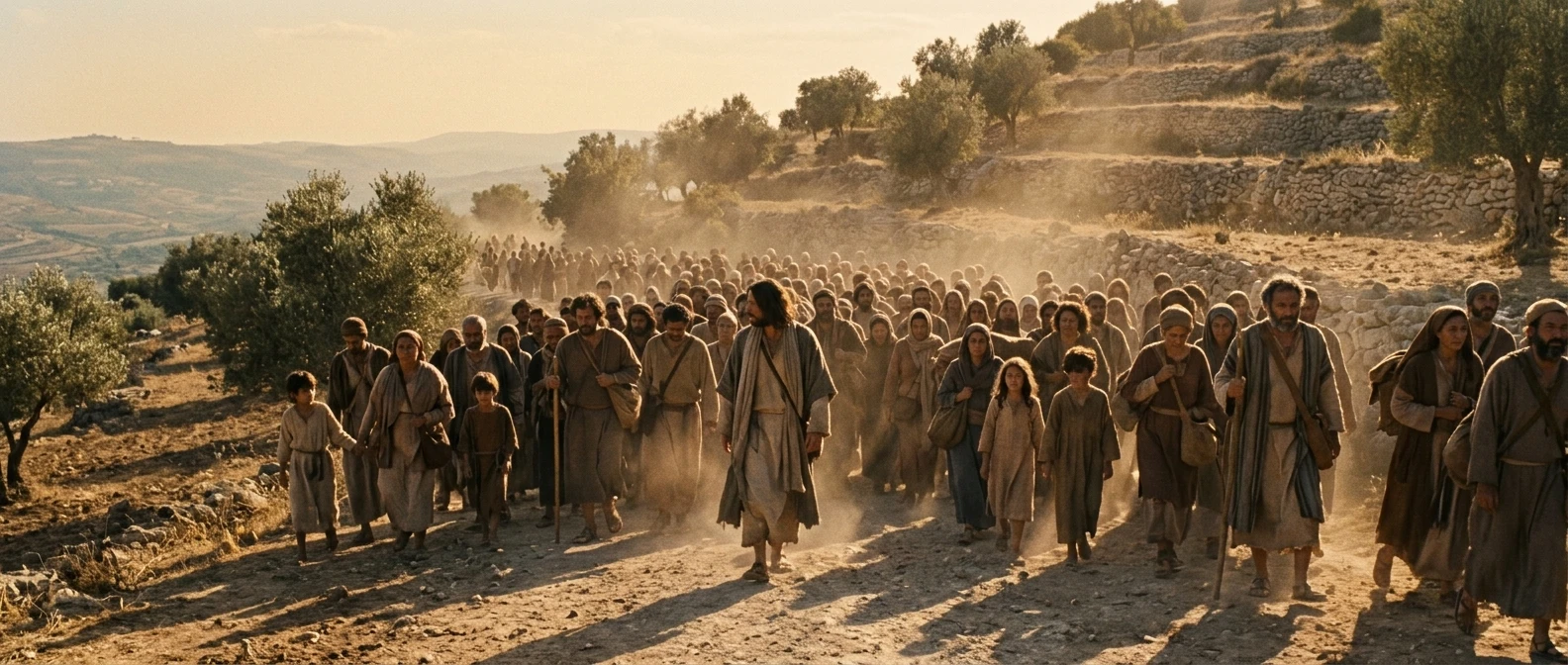
Jesus never once made following Him sound easy. He never dangled an effortless life in front of a crowd to get more hands raised. In Luke 14, as crowds were following Him, He turned around and told them to sit down and do the math first. He wanted thinkers, not impulse signers. He wanted people who understood what they were saying yes to before they said it.
That is the heart of counting the cost of discipleship: not fear, not hesitation, but honest arithmetic. Jesus is not asking you to be reckless with your life. He is asking you to be clear-eyed about what following Him will actually require, and then to decide, with open eyes, that He is worth it.
Why Jesus Never Promised an Easy Yes
Picture the scene in Luke 14:25-33. Large crowds are walking with Jesus, drawn by the miracles, the teaching, the sense that something extraordinary is happening. Instead of welcoming the momentum, Jesus slows everyone down. He talks about hating father and mother by comparison to loving Him, about carrying a cross, about losing your own life. Then He gives two short parables about counting cost before you commit.
This was not Jesus thinning the crowd for sport. He was protecting people from a shallow yes they would later regret. A commitment made without understanding its weight tends to collapse the first time it gets heavy. Jesus would rather you walk away now, clear about the terms, than walk twenty steps in and quit in front of everyone.
For a new disciple, this is actually good news. You are not failing if following Jesus costs you something real. You are experiencing exactly what He said it would cost. The question was never whether there would be a price. The question is whether you have counted it and decided He is worth it.
What the Builder and the King in Luke 14 Were Really Weighing
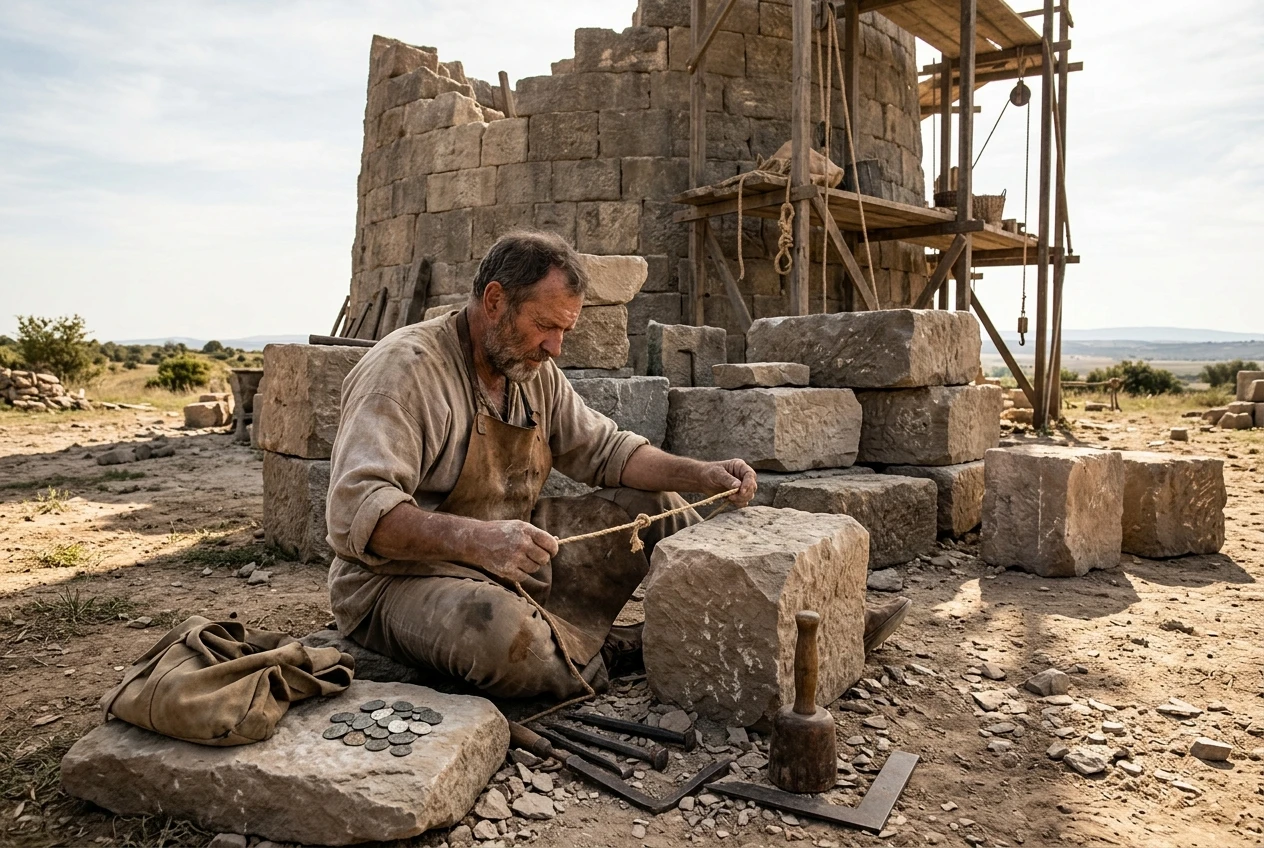
The two parables Jesus gives are deliberately ordinary. A man wants to build a tower. Before he lays the foundation, he sits down and figures out whether he has enough money to finish it. If he starts without checking, and runs out partway through, everyone who watches the unfinished tower will mock him. Not because building was wrong, but because he never weighed the full cost before he started laying stones.
The second parable is a king facing war. Ten thousand soldiers against an opposing twenty thousand. Before he marches out, he sits down with his advisors and considers whether he can actually win. If the numbers do not work, he sends a delegation to ask for terms of peace while there is still time.
In both stories, the weighing happens before the commitment, not during it, and not after regret sets in. The builder is not asking “do I want a tower,” he already wants one. He is asking “do I have what this costs.” The king is not asking whether war sounds appealing. He is asking whether he can sustain the fight he is about to start.
That is the posture Jesus wants from you. Not “is Jesus appealing,” you already know the answer to that or you would not be reading this. The real question is: have you weighed what following Him will cost you in time, money, and attention, and decided to pay it anyway?
The Three Things Jesus Asks You to Invest: Time, Money, and Attention
Discipleship is not abstract. It shows up in a calendar, a bank account, and a mind.
Time. Prayer takes time. Reading Scripture takes time. Gathering with other believers takes time. None of this happens by accident; it happens because you decided it mattered enough to take a slot that used to belong to something else.

Money. Giving is part of discipleship, and so is spending on things that help you grow: a study Bible, a course, a church you support. Money is one of the clearest windows into what a person actually values, which is why Jesus talked about it so often.
Attention. This is the quietest cost and the easiest to underpay. Attention is where your mind goes when nothing is forcing it anywhere in particular. A disciple’s attention keeps returning to what Jesus taught, turning it over, letting it shape decisions long after the sermon or the reading session has ended.
None of these three are optional extras for the especially devoted. They are the ordinary shape discipleship takes in a normal week. Jesus asking for them is not Him taking something from you. It is Him telling you plainly what loving Him will look like in practice, the same way the builder was told plainly what the tower would cost before he picked up a tool.
When Giving Feels Like Loss (And Why That Feeling Is Honest)
There will be mornings when the hour you give to prayer feels like an hour you lost. There will be months when the money you give feels tight because of it. There will be moments when turning your attention back to Jesus instead of to a worry or a grievance feels like putting down something you wanted to hold onto.

That feeling is not a sign something has gone wrong. It is the honest sensation of a real cost being paid. Jesus never said the cost would feel like nothing. He said count it, meaning: know it will register, know it will sometimes sting, and decide in advance that you are willing to feel that sting because of what it buys.
A builder who has counted the cost correctly still feels the weight of every payment on the materials. He just is not surprised by it, and he does not mistake the weight for a mistake. The feeling of loss, honestly named, is actually evidence that you understood the terms before you agreed to them.
How Investment Comes Back Multiplied, Not Lost
Jesus was equally direct about the other side of the ledger. In Mark 10:29-30, He told His disciples that no one who has left houses, family, or fields for His sake and the gospel’s fails to receive back far more, in this life and in the one to come. The cost is real. So is the return, though it rarely arrives in the same currency you spent.
Time given to prayer tends to come back as clarity you did not have before you started. Money given tends to come back as a freedom from money’s grip on your decisions. Attention given to Jesus tends to come back as a mind less cluttered by things that never deserved that much space in the first place.
This is not a transaction where you deposit effort and withdraw blessing on schedule. It is closer to what happens when you plant something and tend it. The return is not identical to the input, and it is not instant, but it is real, and over time it becomes unmistakable to the person who has been doing the planting.
Practical Ways to Invest in Your Walk This Week
Counting the cost is not a one-time calculation you finish and file away. It is a decision you keep making in small, concrete choices. A few places to start:
-
Set a fixed time for prayer each day, even ten minutes, and protect it the way you would protect an appointment with someone you respect. If you want a structured way to build this, a thirty day prayer plan for beginners gives you a clear place to begin.
-
Choose one recurring expense, whether it is giving to a church or investing in materials that help you study, and treat it as a line item that reflects what you value, not an afterthought.
-
Pick one habit of attention, such as returning to a single verse throughout the day, and practice bringing your mind back to it every time it wanders.
-
Ask yourself honestly, at the end of each week, what time, money, or attention you gave to Jesus, and whether that amount matches what you say you believe about Him.
None of these will feel dramatic in the moment. That is normal. The tower was not built in one day either; it was built one weighed, paid-for stone at a time.
Take the Next Step
If counting the cost has you ready to invest further, not less but more deliberately, the structured path can help you build on this instead of starting over every week on your own. Take the next step with the structured discipleship course built for exactly where you are right now.