
Every course like this collects a few stories that get told over and over, the ones where something clearly turned. Not because the rest of the stories do not matter, but because turning points are what a hesitant reader actually needs to see. If you are weighing whether to join, you do not need another list of benefits. You need to recognize your own stuck place in someone else’s story and watch what happened next.
The four stories below are composites, drawn from the kinds of moments that show up again and again in this course: the woman who almost quit before prayer ever felt real, the man who read scripture for years without it landing, the student too afraid to ask a question out loud, and the son who carried an old wound into every room he entered. None of them is one single person. All of them are true to what actually happens here.
She Almost Quit in Week Three: A Breakthrough in Prayer
By week three, she had already decided the course was not working. She showed up for the lessons, wrote in the journal, said the words she was supposed to say at night. But prayer still felt like leaving a message for someone who was not picking up. She started wondering if the problem was her, if she lacked whatever it was that made other people’s faith look effortless.
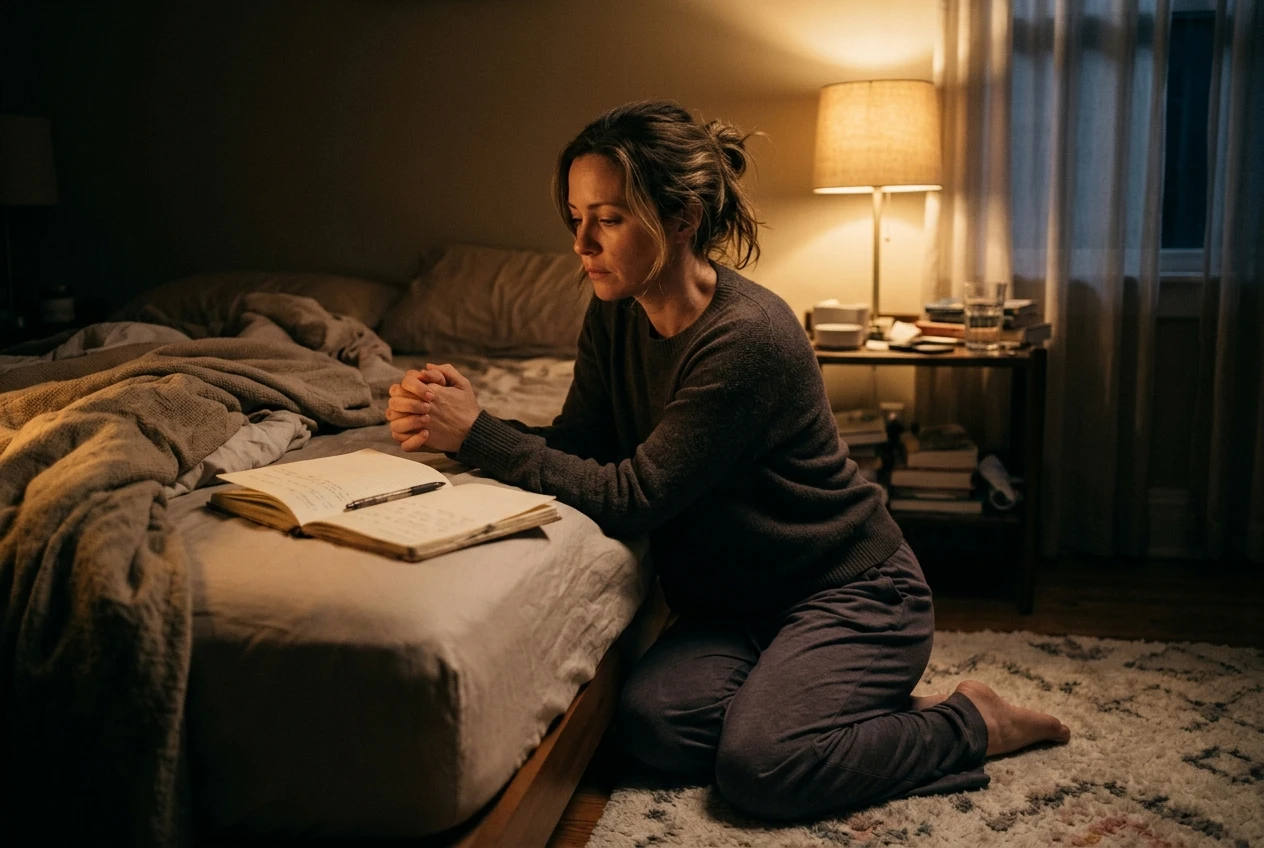
What changed was not a dramatic answer to prayer. It was a smaller shift inside a thirty-day structure she had been following without much hope left in it. One evening she stopped asking God for things and started simply telling Him what the day had actually been like, the ordinary parts included. Something about naming it honestly, instead of performing it, made the room feel less empty.
She has said since that the turning point was not learning a better technique. It was giving herself thirty days instead of three. If a stalled prayer life is where you are right now, the course’s thirty day prayer plan walks through exactly the structure she followed, one day at a time.
From Reading Without Understanding to Craving the Word Daily
He had read the Bible cover to cover twice before he ever opened a page of this course. He knew the stories. He could not have told you why any of them mattered to his Tuesday. Reading had become a box to check, and he was tired of checking it without feeling anything move.

The shift came when he was handed a method instead of a list of chapters. Instead of reading to finish, he learned to read to ask a handful of simple questions of the text: what is actually being said here, who is it being said to, what does it ask of me now. The first few times felt mechanical. Then one ordinary afternoon, a passage he had read a dozen times before suddenly had weight to it, because this time he was reading for an answer instead of reading for a record.
That is the difference between reading without understanding and craving the Word daily: a method that turns the page into a conversation. If flat, dutiful reading is where you are stuck, this first deep Bible study method is built for exactly that gap between reading and understanding.
Finding the Courage to Ask Questions Out Loud
She sat in the back of every group session for the first month, silent. She had questions, real ones, the kind that felt too basic or too doubtful to say in front of people who seemed further along. So she nodded, took notes, and carried the questions home unanswered.

The turning point came in an ordinary moment when someone else in the group asked a question she had assumed was too simple to ask, and the mentor treated it with the same seriousness as anything else that night. Nobody flinched. Nobody made it small. That was the evidence she needed that this was a room built for questions, not a room to survive until the answers arrived on their own.
The next week she asked her first question out loud. It was not a profound one. It mattered anyway, because asking it broke something that had been holding her back for a month. If you are carrying questions you have been afraid to say, this guide to the questions worth asking a mentor is a place to start before you ever have to say them in a room.
The Night He Finally Forgave His Father
He had come to faith already carrying something heavy: years of distance from a father who had never apologized and probably never would. He could talk about forgiveness in the abstract. He could not say his father’s name without his voice changing.
The turning point was not a single verse, though a particular passage on the subject of forgiveness did become the hinge he kept coming back to. It was the slow work of distinguishing forgiveness from excusing, and release from reconciliation. He did not need his father to apologize for him to put the weight down. He needed to decide, deliberately, on a particular night, that he was done carrying it.
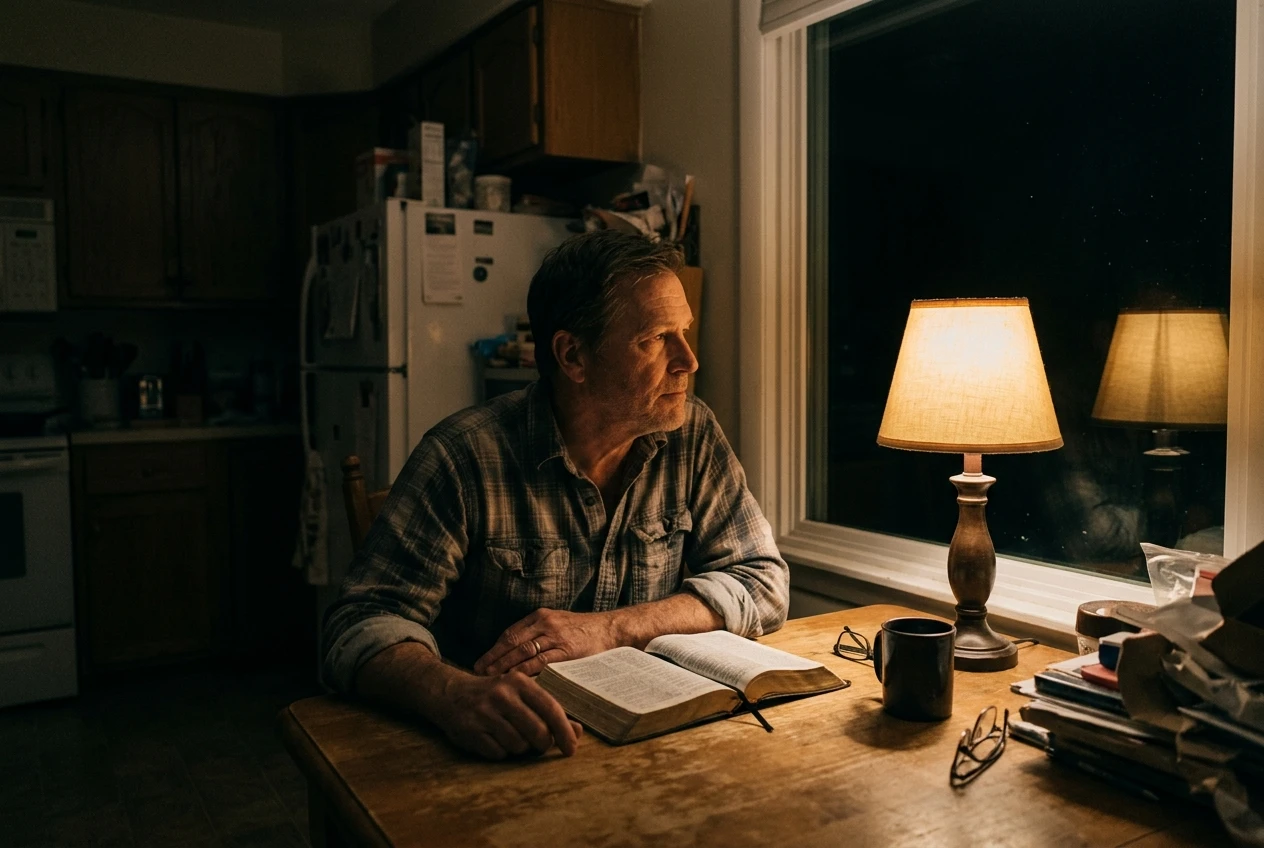
He has described that night as the first time scripture felt less like information and more like instruction he could actually follow. The wound did not disappear. What changed was what he was doing with it.
What These Four Stories Have in Common
Set side by side, these stories of spiritual transformation through Bible study look very different on the surface: prayer, reading, courage, forgiveness. Underneath, the pattern is the same in every case.
-
Each person had tried something on their own first, and it had stalled.
-
Each turning point came through structure, not willpower, a plan, a method, a group, a passage returned to on purpose rather than a sudden feeling that arrived unasked.
-
Each change was ordinary to watch from the outside and significant to live through on the inside.
-
None of them required the person to already be mature. They required the person to stay long enough for something to shift.
That last point matters more than it sounds like it should. Transformation in these stories did not arrive in week one. It arrived because each person kept showing up past the point where quitting would have been easier. The course did not manufacture the breakthrough. It held the structure steady long enough for the breakthrough to happen.
Where You Might Be in Your Own Story Right Now
You may already recognize yourself in one of these four. Maybe prayer has started to feel like a formality you are losing faith in. Maybe you have read scripture for years and felt less, not more, connected to it over time. Maybe you have a question you have never said out loud, or a name you cannot say without something tightening in your chest.
None of those places are unusual. They are the common starting points of nearly every student who has gone on to describe real change inside this course. The stalled place is not a disqualifier. It is usually the exact spot where the next part of the story begins.
If one of these stories sounds like where you are right now, subscribe to the course this month and let your own story of transformation begin.